
Welcome to the Plant Library
The Traphouse Nursery Plant Library is where we share growing guides, plant stories, propagation notes, care tips, and collector-focused information about the unusual plants we grow, study, and offer.
Here you’ll find articles on rare plants, carnivorous plants, tropical species, botanical specimens, seeds, cuttings, and nursery stock.
Every plant has a story. This library is where we begin telling them.
Impatiens tuberosa: The Caudiciform Impatiens That Changed How I Look at the Genus
Impatiens tuberosa is not the common bedding impatiens most people know. This rare species from Madagascar forms a swollen caudex-like base, produces seasonal stems, and blooms with delicate pink flowers marked with yellow near the throat. It is a collector plant with real botanical interest and a growth cycle worth understanding.
Impatiens tuberosa is not the common bedding impatiens most people know. This rare species from Madagascar forms a swollen caudex, grows seasonal stems, and produces delicate pink flowers that make it a serious collector plant.
Most people hear the word “impatiens” and immediately think of common bedding plants — the soft, shade-loving annuals sold in trays at garden centers. Those plants have their place, but Impatiens tuberosa is something completely different.
This is not just another flowering impatiens.
Impatiens tuberosa is a rare, tuberous, caudex-forming species from Madagascar. Instead of growing like a typical bedding plant, it develops a swollen storage structure at the base of the plant. From that base, it produces seasonal stems, soft foliage, and delicate pink flowers with yellow markings near the throat.
It is the kind of plant that makes you realize how much diversity is hidden inside familiar plant groups.
Quick plant profile
Scientific name: Impatiens tuberosa
Family: Balsaminaceae
Plant type: Caudex-forming / tuberous impatiens
Native range: Madagascar
Growth habit: Seasonal stems emerging from a swollen basal structure
Flowers: Pink to rose-colored with lighter centers and yellow markings
Collector interest: Rare impatiens, caudiciform plant, Madagascar endemic, unusual flowering species
Best for: Experienced tropical plant growers, rare plant collectors, caudex collectors, and growers interested in unusual species
Why this plant is different
Most common impatiens are grown for fast color. They are treated like seasonal bedding plants, watered heavily, and replaced when they decline.
Impatiens tuberosa should not be approached that way.
This species has a storage structure, often described as a caudex or tuber-like base. That swollen base allows the plant to store energy and survive seasonal changes. The above-ground stems may grow, flower, decline, and eventually die back, while the basal structure remains alive and capable of producing new growth later.
That is what makes this plant so interesting.
It combines the soft, delicate appearance of an impatiens with the survival strategy of a caudiciform plant.
What is a caudex?
A caudex is a swollen stem base, trunk, or root-like structure that stores water, energy, or nutrients. Not every caudex plant works the exact same way, but the basic idea is that the plant has a built-in storage system.
In Impatiens tuberosa, this swollen base is one of the most important parts of the plant. The flowers may be what catch your eye first, but the caudex is what makes the plant botanically unusual.
For growers, this matters because a caudex-forming plant often has a seasonal rhythm. It may not grow the same way all year. It may slow down or drop stems during a rest period. That does not automatically mean the plant is dead.
The key is learning the difference between normal seasonal dieback and actual rot.
Flowers and appearance
The flowers are one of the best features of Impatiens tuberosa.
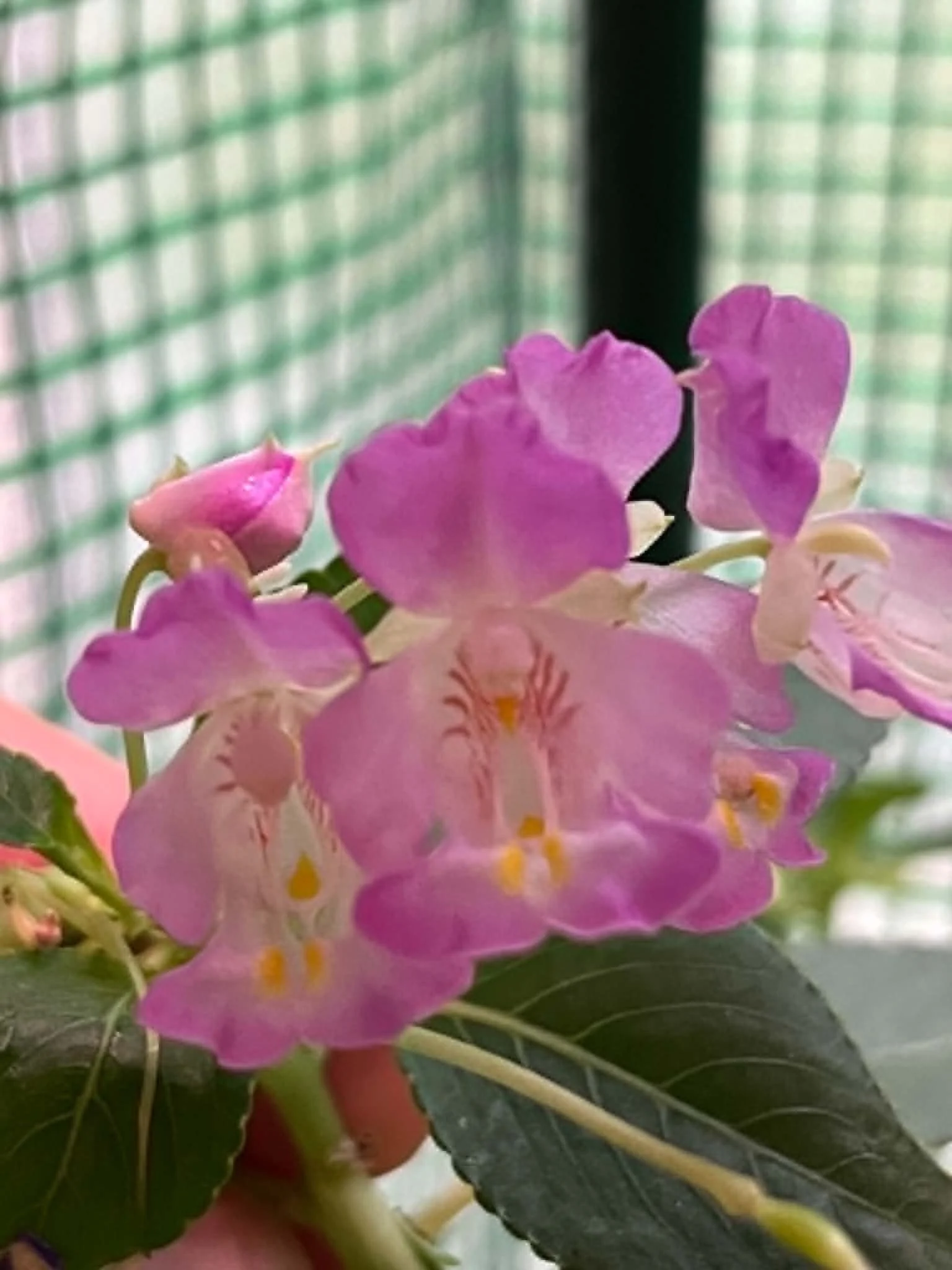
The blooms are soft pink to rose-pink, with lighter inner coloring and yellow markings near the throat. Up close, they almost have an orchid-like look. They are delicate, but not plain. The markings help give the flower depth, and the shape is different enough to stand out from common garden impatiens.
On my plant, the flowers appear in clusters and have a soft tropical look that photographs beautifully. This is one of those plants where the closer you look, the more detail you notice.
That is part of the collector appeal.
It is not just rare. It is genuinely beautiful.
Native habitat and what it tells growers
Impatiens tuberosa comes from Madagascar, one of the most unique plant regions in the world. Madagascar is famous for unusual plant life, including many species that evolved in isolation and developed specialized survival strategies.
This matters because the plant’s structure gives us clues about how to grow it.
The swollen base suggests that the plant is adapted to seasonal conditions. Instead of staying soft and leafy forever, it can store energy and return from the base when conditions improve.
For growers, that means we should not treat it exactly like a regular impatiens. It appreciates moisture while actively growing, but the caudex should not be kept constantly wet and stagnant, especially if the plant is resting.
The goal is balance: moisture during active growth, drainage and airflow around the roots, and caution during dormancy or slowdown.
How I grow Impatiens tuberosa
In my conditions, Impatiens tuberosa has done best with bright filtered light, warmth, steady moisture during active growth, and good airflow.
I do not grow it bone dry while it is actively producing stems and flowers. At the same time, I do not want the potting mix staying sour, heavy, and waterlogged. That is where growers can get into trouble.
A good approach is to use a mix that holds some moisture but still drains well. The plant should not be sitting in compacted mud. Roots need oxygen. The caudex needs to stay firm. The media should support moisture without suffocating the plant.
For light, I prefer bright indirect light or filtered light. Too little light can cause weak growth, but harsh direct Florida sun can be too much, especially during the hottest part of the day. In a greenhouse or shade structure, filtered light is usually a good starting point.
Watering
During active growth, Impatiens tuberosa does not want to be neglected. The stems and leaves are soft, and the plant can wilt if it gets too dry while actively growing.
That said, watering should match the plant’s stage.
When the plant is actively growing and flowering, I keep it evenly moist but not swampy. When growth slows down, I reduce watering and become more careful. If the stems begin to die back naturally, the caudex may be entering a rest period.
That is when overwatering becomes dangerous.
A resting caudex does not need the same amount of water as an actively growing plant. Keeping it too wet while it is not using much moisture can lead to rot.
Dormancy and dieback
This is probably the most important thing new growers need to understand.
Impatiens tuberosa may go through seasonal dieback.
The stems can decline or fall away while the caudex remains alive. If you are used to regular impatiens, this can look scary. With this species, though, dieback can be part of the growth cycle.
Do not throw the plant away just because the top growth disappears.
Check the caudex. If it is firm, the plant may simply be resting. If it is soft, mushy, collapsing, or smells bad, that is a rot issue.
The difference matters.
A healthy dormant caudex is a plant waiting for the right time to grow again. A rotting caudex is a plant in trouble.
Propagation
Impatiens tuberosa can be grown from seed, and that is one of the most rewarding ways to grow it.
I grew mine from seed, and that process gave me a much better appreciation for the plant. Raising a rare species from seed teaches you patience. You get to see the plant develop from the beginning, form structure, mature, and eventually flower.
Seed-grown plants are also important for keeping rare species in cultivation. Every successful seedling is another plant that can be grown, studied, shared, and preserved by collectors.
Like many impatiens, seed capsules may release seed quickly when mature. The name Impatiens is connected to the way many species have seed pods that burst open when ripe. That means seed collection takes timing. If you wait too long, the plant may launch the seeds before you get to them.
For growers trying to produce seed, close observation is important.
Common growing mistakes
The biggest mistake is treating Impatiens tuberosa like a common bedding impatiens.
It is not a plant to throw into heavy wet soil and forget about.
Another mistake is treating it like a desert succulent just because it has a caudex. That is not right either. During active growth, it still produces soft stems and leaves that appreciate moisture.
The third mistake is panicking during dieback. Seasonal decline does not always mean death.
The fourth mistake is watering too much during rest. If the plant slows down or drops stems, watering should be adjusted.
This plant sits somewhere between tropical impatiens care and caudiciform plant care. That is what makes it interesting, but it also means the grower has to pay attention.
Why collectors should care
Impatiens tuberosa has everything I like in a collector plant.
It has a story. It has unusual structure. It has beautiful flowers. It comes from a botanically important region. It teaches you something about plant adaptation. It is familiar enough to recognize as an impatiens, but strange enough to completely change how you see the genus.
This is the kind of plant that makes people stop and ask, “Wait, that is an impatiens?”
That question is exactly why I grow plants like this.
A good collector plant should do more than sit on a shelf. It should make you curious. It should make you want to learn where it comes from, why it grows the way it does, and how to keep it healthy long-term.
Impatiens tuberosa does all of that.
Final thoughts
Growing Impatiens tuberosa has reminded me that common plant groups can hide some truly unusual species.
Most people think they know what an impatiens is. Then they see one with a swollen caudex, seasonal stems, and delicate pink flowers from Madagascar, and suddenly the whole genus feels different.
That is what makes rare plants worth studying.
They teach you that the plant world is bigger, stranger, and more interesting than it first appears.
At Traphouse Nursery, this is exactly the kind of plant I love growing — not just because it is rare, but because it has something to teach.
Educational note: This article is based on my growing experience with Impatiens tuberosa at Traphouse Nursery, along with available botanical information on the species. Growing results may vary depending on your climate, light, potting mix, watering habits, and seasonal conditions.
image caption:
Impatiens tuberosa blooming at Traphouse Nursery. This rare species produces soft pink flowers with yellow throat markings and grows from a swollen caudex-like base.
Aloe zombitsiensis: A Rare Madagascar Aloe in Bloom at Traphouse Nursery
Aloe zombitsiensis is a rare and beautiful aloe species from Madagascar with serious collector appeal. Known for its textured foliage, striking form, and unusual flowers, this species is more than just another succulent. This post explores its background, growing needs, pollination potential, and why it deserves a place in serious rare plant collections.
Some plants grab your attention because they are flashy. Others pull you in because they are different, uncommon, and full of quiet character. Aloe zombitsiensis falls into that second group.
Aloe zombitsiensis is an unusual Aloe species from Madagascar, a place known for some of the most fascinating and specialized plant life in the world. Madagascar plants often carry a certain collector appeal because so many of them evolved in unique habitats and have growth habits you do not see in ordinary nursery plants.
At Traphouse Nursery, Aloe zombitsiensis is one of those plants that reminds us why rare species are worth growing carefully.
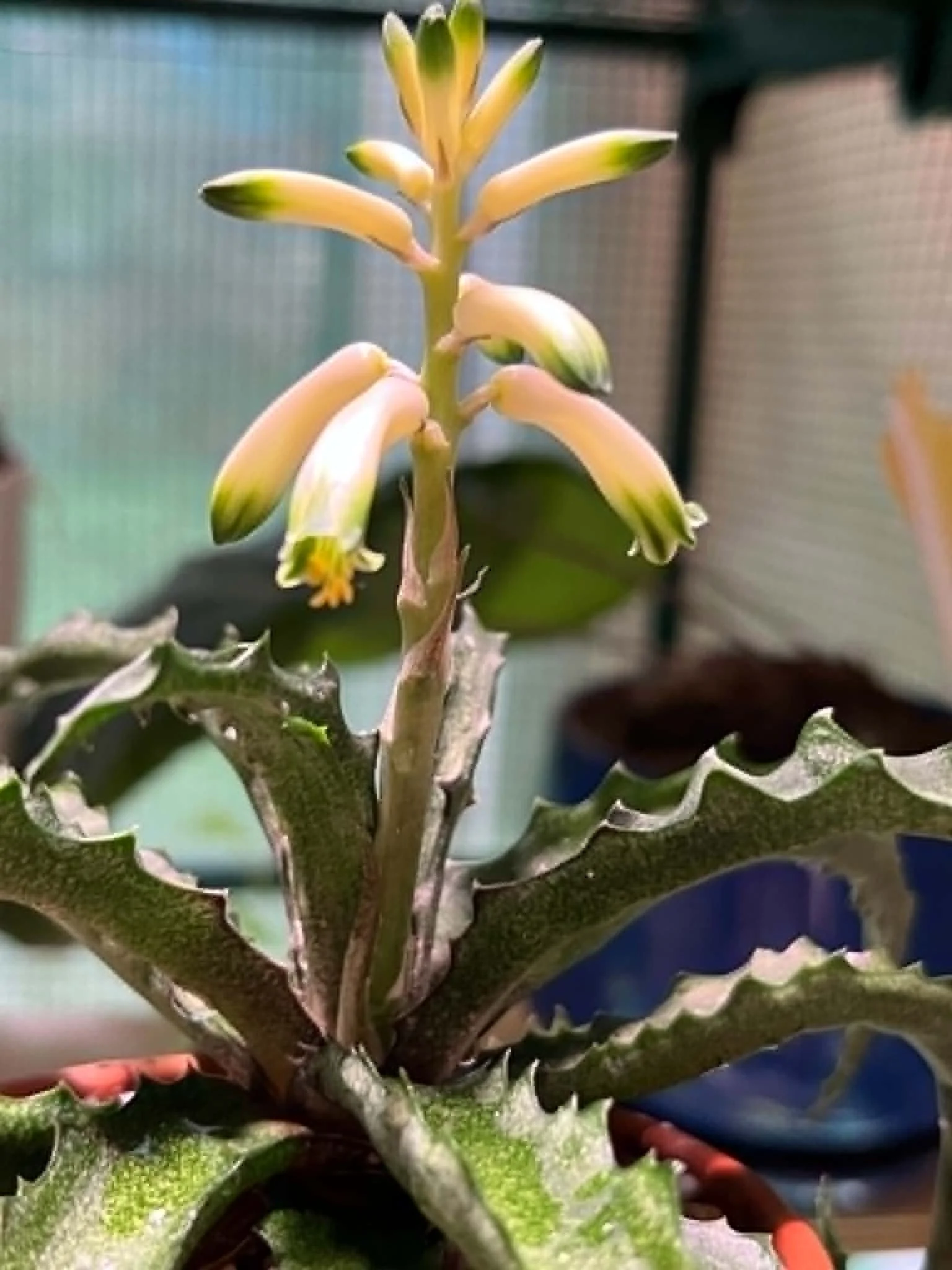
Our Aloe zombitsiensis is currently in full bloom, and even more exciting, it has three seed pods ripening. For a collector plant, that is a special moment. Flowering is already rewarding, but seed pods mean there may be an opportunity to grow the next generation from seed and preserve more genetic diversity in cultivation.
Why Aloe zombitsiensis Is Worth Growing
Aloe zombitsiensis is not the common grocery-store Aloe most people are familiar with. It has a more collector-grade presence and belongs in the conversation with rare succulents, Madagascar plants, and unusual botanical specimens.
It is the kind of plant that may not be recognized by everyone at first glance, but growers who enjoy uncommon species will immediately understand why it matters.
This plant fits well into several kinds of collections:
Rare Aloe species
Madagascar plants
Succulent collections
Collector-grade nursery stock
Greenhouse specimens
Unusual botanical displays
For us, the appeal is not just that it is rare. The appeal is that it has a story, a place of origin, a growth rhythm, and now, in our collection, a flowering and seed-setting event worth documenting.
Growing Aloe zombitsiensis
Aloe zombitsiensis should be treated like a rare succulent, not like a tropical houseplant that wants constant moisture. The key is bright light, excellent drainage, and careful watering.
Light
Grow Aloe zombitsiensis in bright light. In Florida, bright filtered light, morning sun, or protected greenhouse light is usually safer than harsh all-day summer sun, especially for young plants or plants that have been grown under shade.
Strong light helps keep Aloe growth compact and healthy, but sudden exposure to intense sun can stress the plant or burn the leaves. Any increase in light should be done gradually.
Water
Water deeply, then allow the potting mix to dry down before watering again. Aloe zombitsiensis does not want to sit wet.
Overwatering is one of the easiest ways to damage uncommon Aloe species. A plant sitting in heavy, wet soil can decline quickly, especially during cooler weather or periods of slower growth.
During warm, active growth, the plant may use more water. During cooler weather or slower growth, water less often and allow the plant to stay on the dry side.
Soil
Use a fast-draining succulent mix. A gritty blend with ingredients like pumice, perlite, coarse sand, lava rock, or similar drainage material is better than a heavy, moisture-holding potting soil.
The goal is simple: water should move through the pot easily, and the roots should never stay soggy.
Pot Size
Avoid oversized pots. A pot that is too large can hold excess moisture around the roots and increase the risk of rot. A snug, well-draining pot is usually better than a large decorative container.
Temperature
Aloe zombitsiensis is best treated as a warm-climate plant. Protect it from frost, cold rain, and sudden cold snaps.
In colder areas, this plant should be grown in a pot that can be moved indoors, into a greenhouse, or into a protected area during winter.
Blooming and Seed Pods
Seeing Aloe zombitsiensis in bloom is exciting, but seeing seed pods develop takes it a step further.
Our plant currently has three seed pods ripening. These pods should be allowed to mature fully on the plant before collection. Aloe seed pods are usually ready when they begin to dry and split naturally. Harvesting too early can result in immature seed that may not germinate well.
Once mature, the seeds can be collected, dried briefly, and sown in a clean, well-draining seed-starting mix. Fresh Aloe seed is usually best sown sooner rather than stored for a long time.
Seed-grown plants are valuable because they are not just clones. Each seedling can show slight natural variation, and growing from seed helps preserve diversity within the species.
Why This Plant Matters
Rare plants do not have to be loud to be important. Some of the best plants in a collection are the ones with quiet value: unusual origin, interesting growth habit, conservation importance, and the ability to teach us something new.
Aloe zombitsiensis is one of those plants.
It represents the kind of nursery stock we love most at Traphouse Nursery: unusual, educational, collector-worthy, and worth growing with care.
Whether you are building a rare Aloe collection, exploring Madagascar plants, or simply looking for something different from the average succulent, Aloe zombitsiensis is a plant worth knowing.
And right now, with our plant in full bloom and three seed pods ripening, it is one of the most exciting plants in the Traphouse Nursery collection.
— Traphouse Nursery
Rifat: The Clone That Helped Put Kratom on the Scientific Map
Some plants are just inventory.
Others carry a story.
Mitragyna speciosa ‘Rifat’ is one of those plants that deserves more than a quick product description. To me, Rifat is not just another tropical tree or another named clone. It represents cultivation, preservation, science, curiosity, and the deeper mystery hidden inside plants.
That is the kind of plant that belongs at Traphouse Nursery.
I have always been drawn to plants that make people ask questions. Orchids did that for me as a kid. Venus flytraps did that when I first realized a plant could catch its own food. Carnivorous plants, medicinal plants, rare species, and unusual tropicals all seem to carry that same kind of wonder.
Rifat fits right into that world.
What Is Mitragyna speciosa?
Mitragyna speciosa, commonly known as kratom, is a tropical tree native to Southeast Asia. It belongs to the coffee family, Rubiaceae, which also includes coffee, gardenias, and many other important tropical plants.
In nature, Mitragyna speciosa can grow into a large tree with broad green leaves and a strong tropical presence. In cultivation, it is often grown by collectors, ethnobotanical growers, and people interested in medicinal plant history.
At Traphouse Nursery, I approach this species first as a living plant.
Not as hype.
Not as a cure.
Not as a controversy.
As a plant with history, chemistry, genetics, and purpose.
Why Rifat Matters
Among named Mitragyna speciosa clones, Rifat has become one of the most recognized.
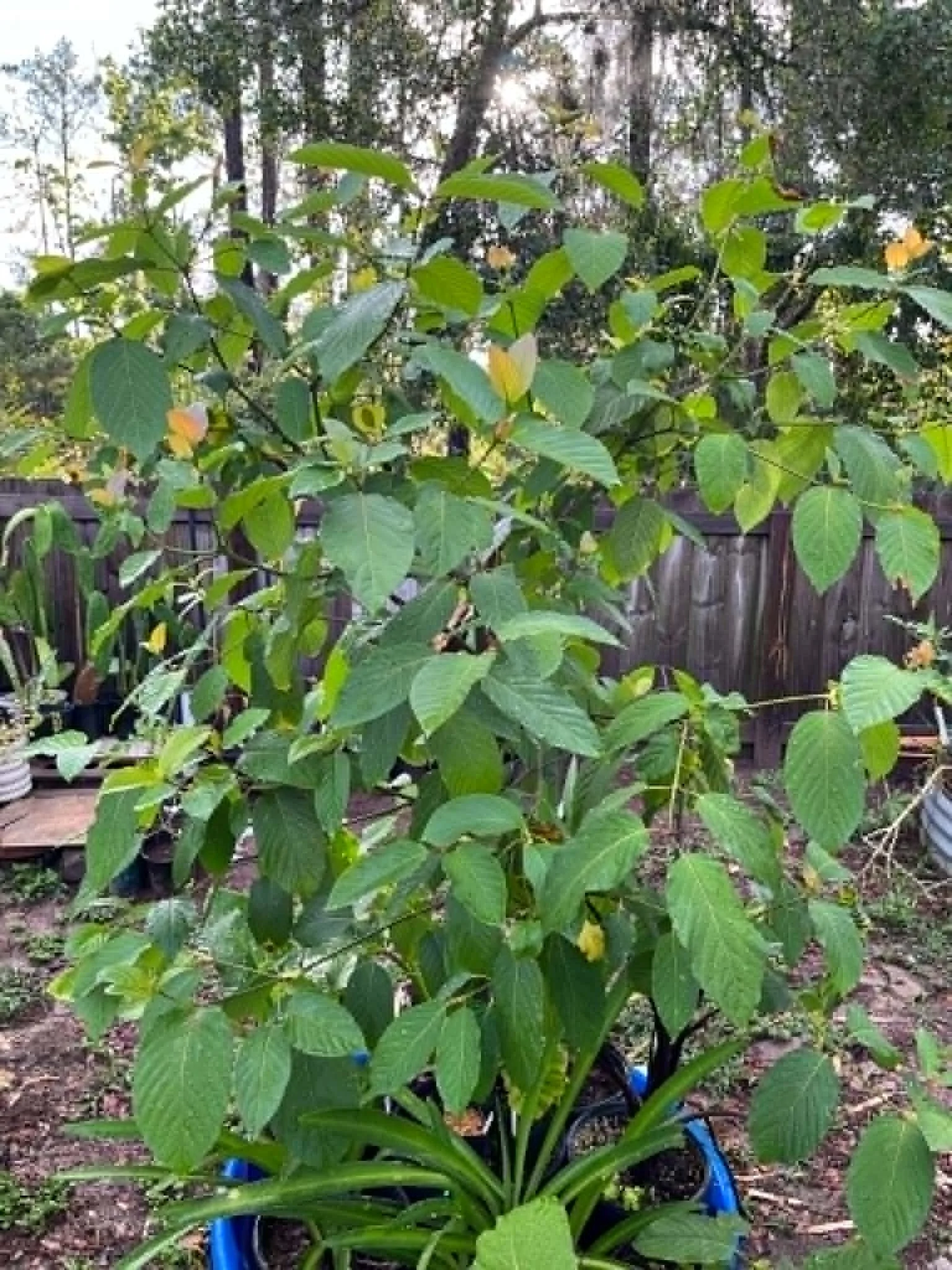
Growers appreciate it because it is vigorous, adaptable, and reliable under the right conditions. It responds well to pruning, roots from cuttings, and can be maintained as a container-grown tropical tree.
But Rifat is especially interesting because it was used in genome research on Mitragyna speciosa.
That means scientists studied this clone deeply enough to assemble its genome and use it as a resource for understanding the species at a genetic level. For growers and plant people, that makes Rifat more than just a clone. It makes it part of the scientific story of kratom.
I love that.
Because to me, plants are full of hidden knowledge.
The Mystery Inside Plants
One of the reasons medicinal plants fascinate me so much is because of phytochemicals.
Phytochemicals are compounds produced by plants. Some help defend the plant from insects. Some help protect it from stress. Some attract pollinators. Some interact with animals and humans in ways we are still trying to understand.
I believe God hid wonders and mysteries inside plants in the form of phytochemicals, and made mankind to discover them at the proper time.
That belief is a big part of why I am drawn to plants like Mitragyna speciosa.
The more we study plants, the more we realize we are not inventing the mystery. We are uncovering it. We are learning to recognize what was already there.
Rifat is a perfect example of that. A living tree, passed through cultivation, eventually became part of a scientific effort to better understand the genetics and chemistry of an important medicinal species.
That is not ordinary.
That is worth paying attention to.
A Clone Preserved Through Propagation
Rifat is propagated as a clone, which means it is preserved through cuttings rather than grown from seed.
That matters.
A seed-grown plant is a new individual with its own genetic identity. A clone preserves a specific genetic line. When a grower propagates Rifat from cuttings, they are preserving the same living line from one plant to the next.
That is one of the things I love about propagation.
Propagation is not just making more plants. It is preserving genetics. It is keeping a line alive. It is passing something forward.
My first successful propagation was a Queen’s Tears bromeliad when I was about eight years old. I still remember the feeling of realizing one plant could become more than one. That experience shaped the way I look at growing. A good plant is not just something to own. It is something to care for, learn from, and share.
Rifat carries that same idea.
A clone with a story should not disappear.
It should be grown, preserved, documented, and passed on responsibly.
What the Genome Research Revealed
The scientific research on Rifat showed that this clone is tetraploid, meaning it carries four sets of chromosomes. That alone makes it interesting from a genetic standpoint.
The genome work also gave researchers a better look at the genes and pathways connected to specialized metabolism in Mitragyna speciosa. In simpler terms, the study helped open the door to understanding how this plant produces some of the compounds that make it so scientifically important.
For a grower, that adds another layer of appreciation.
You are not just looking at a leafy tropical tree. You are looking at a plant carrying complex genetic instructions, chemical pathways, and biological history.
That is the kind of thing that keeps me fascinated.
Plants are quiet, but they are not simple.
Growing Rifat
Rifat grows like a tropical tree because that is exactly what it is.
It appreciates warmth, moisture, humidity, bright light, and rich soil. It does not like cold weather, drought, or being neglected for long periods. When grown well, it can become a beautiful, vigorous plant with large green leaves and strong branching.
For container culture, pruning is important. Regular pruning helps keep the plant manageable and encourages fuller growth. Under good conditions, Rifat can grow quickly and respond well to feeding.
The main things to remember are:
Warmth.
Moisture.
Light.
Nutrition.
Observation.
That last one may be the most important.
Plants will often tell you what they need if you are patient enough to watch them.
A Plant That Requires Responsibility
Because Mitragyna speciosa is surrounded by public debate, it needs to be discussed responsibly.
There are legal, regulatory, and health-related conversations around kratom products. That is why I believe growers and sellers should be careful with their words.
At Traphouse Nursery, Rifat is offered as a live plant for cultivation, collection, propagation, and botanical education. I do not present it as a treatment, cure, supplement, or replacement for medical care.
That distinction matters.
Respecting medicinal plants means telling the truth about them. It means honoring their history without exaggerating claims. It means appreciating their chemistry without pretending we know everything. It means staying humble.
Medicinal plants deserve both wonder and responsibility.
Why Rifat Belongs at Traphouse Nursery
Rifat belongs here because it represents so many things I care about.
It is a medicinal plant.
It is a clone with history.
It is a living genetic line.
It is connected to scientific research.
It is useful for teaching.
It gives growers a chance to observe, propagate, and preserve something meaningful.
That is exactly the kind of plant Traphouse Nursery was built around.
I did not start this nursery just to sell plants that look good in a pot. I started it because I realized there was not really a nursery for people like me—people who love plants for their beauty, their usefulness, their chemistry, their history, their mystery, and their purpose.
Rifat is not flashy like an orchid bloom.
It does not move like a Venus flytrap.
It does not sparkle like a sundew.
But it carries a quiet kind of importance.
And sometimes those are the plants most worth growing.
Final Thoughts
Mitragyna speciosa ‘Rifat’ is more than a clone.
It is a living plant with a scientific footprint, a cultivation history, and a story worth preserving. For growers interested in medicinal plants, ethnobotanical species, rare tropicals, and plant genetics, Rifat deserves respect.
At Traphouse Nursery, my goal is to share love and knowledge through plants.
Rifat gives us both.
It gives us something to grow.
Something to study.
Something to preserve.
And something to wonder about.
— Stephen
Traphouse Nursery
Educational Note
This article is for botanical, historical, and cultivation education only. Traphouse Nursery offers live plants for collection, propagation, and educational growing purposes. No medical claims are made or implied.
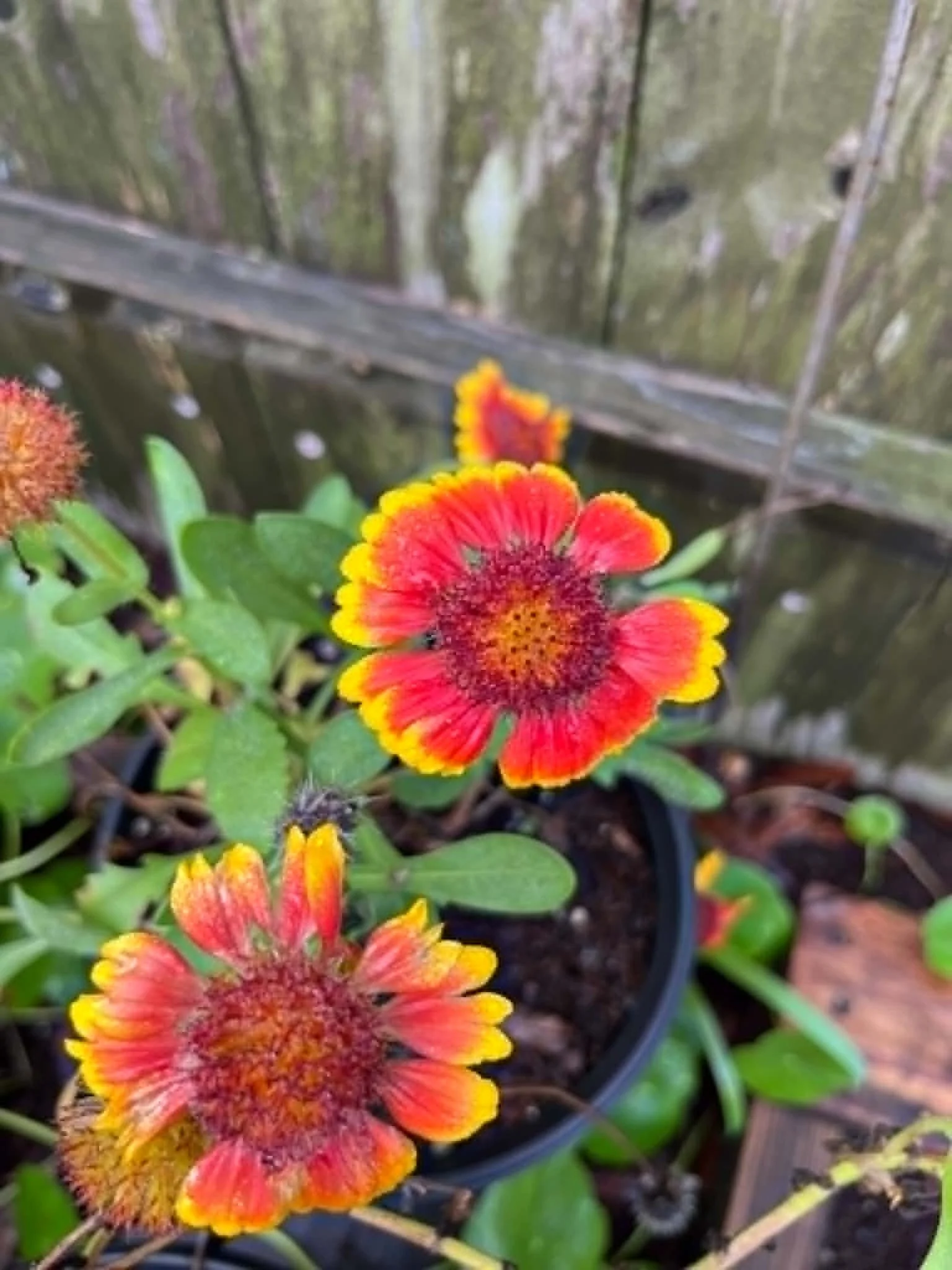
How to Acclimate Shipped Plants:
Newly shipped plants need time to recover from darkness, movement, temperature changes, and handling during transit. This post explains how to properly acclimate shipped plants using gentle light, careful watering, humidity, airflow, and patience so they can settle in and start growing strong again.
A Grower’s Guide to Reducing Stress
Getting a new plant in the mail is exciting. I don’t care how many times you’ve done it, there is still something about opening that box and seeing what made it through the trip. But that is also the exact moment where a lot of growers accidentally mess things up.
A shipped plant has just been through stress. It has been boxed up, moved around, kept in darkness, exposed to temperature swings, and separated from the stable environment it was growing in. Even when a plant is packed correctly and arrives looking good, it still needs time to adjust.
That adjustment period is called acclimation.
Acclimation is not complicated, but it does require patience. A lot of people want to immediately repot, fertilize, blast it with light, water it heavy, or put it right into their main grow area. Sometimes the best thing you can do for a newly shipped plant is less. Less handling. Less light. Less fertilizer. Less panic.
Plants grow best when the main environmental factors are balanced: light, temperature, water, humidity, soil or media, and fertilization. Mississippi State University Extension lists those as some of the most important factors affecting indoor plant success, and in my experience, shipped plants are where those basics matter the most.
First, inspect the plant
When your plant arrives, open the box carefully. Don’t yank anything out. Remove the packing slowly and check the leaves, stem, roots if visible, and growing point.
Some yellow leaves, bent petioles, soft older foliage, or minor spotting can happen after shipping. That does not automatically mean the plant is dying. A lot of tropical plants will sacrifice older leaves when conditions change. The important thing is whether the stem, crown, rhizome, tuber, or active growing point still looks firm and alive.
If the plant was shipped semi-bare root or bare root, expect it to look a little more stressed than a fully potted plant. That is normal. Roots do not like being exposed, moved, dried, or wrapped, but many plants recover well once they are placed into the right conditions.
Do not put it straight into harsh light
This is one of the biggest mistakes people make.
A plant that has been in a dark box does not need to go directly under intense grow lights or full sun the same day it arrives. Even plants that normally enjoy bright light need time to adjust again.
Think of it like walking out of a dark room into the Florida sun. Your eyes need a minute. Plants need their version of that too.
Iowa State University Extension warns that moving houseplants into much brighter outdoor conditions too quickly can cause leaf burn, discoloration, and leaf drop, and recommends gradually introducing more light over 10 to 14 days when plants are being moved into brighter locations.
For shipped plants, I like starting them in bright indirect light or gentle filtered light. After a few days, if the plant is holding up well, you can slowly increase the light. The goal is not to baby the plant forever. The goal is to avoid shocking it before it has had a chance to rehydrate and stabilize.
Be careful with water
Most people either underwater a stressed plant because they are scared of rot, or they overwater it because they are scared it is drying out. Both can cause problems.
The best approach is to check the media, not the calendar. University of Maryland Extension points out that watering on a fixed schedule is not ideal because plants can end up getting too much or too little water depending on the conditions. They recommend checking moisture directly, such as by feeling the soil, while also paying attention to the plant and pot weight.
For newly shipped plants, I usually want the media evenly moist but not swampy, unless it is a plant that specifically requires bog conditions. Tropical aroids, many Impatiens species, and soft-stemmed plants usually appreciate moisture, but they still need oxygen around the roots. Wet and airless is different from moist and alive.
If the plant arrives dry, water it gently. If it arrives wet, let it breathe before adding more water. Don’t just water because you feel like you need to “do something.”
Humidity helps, but do not suffocate the plant
A lot of tropical plants appreciate extra humidity after shipping. That does not mean you need to seal every plant in a wet plastic tomb.
Humidity can help reduce moisture loss through the leaves while the roots recover, especially for cuttings, tender tropicals, and plants shipped semi-bare root. But there still needs to be some airflow. Stagnant, wet air can invite fungus, rot, and bacterial issues.
University of New Hampshire Extension notes that many houseplants prefer around 40–60% relative humidity, while some tropical species thrive at higher levels. They also recommend keeping plants away from heat vents, radiators, drafty doors, and other drying areas.
For sensitive plants, a humidity dome, clear tote, or bag can help, but I like to vent it daily. You are not trying to pickle the plant. You are trying to give it a soft landing.
Wait before fertilizing
A stressed plant does not need a heavy meal.
Fertilizer is useful when a plant is actively growing and has a root system ready to use it. But a newly shipped plant is often focused on recovery first. Fertilizing too early can burn roots, worsen stress, or push weak growth before the plant is ready.
Give it time. Let it show you new growth. Once it starts actively growing again, then you can slowly return to a normal feeding routine for that species.
Do not repot unless you need to
This one depends on how the plant was shipped.
If the plant arrives potted and the media is appropriate, I usually leave it alone for a bit. If it was shipped bare root or semi-bare root, then yes, it needs to be potted into the right media. But even then, I try to avoid overhandling the roots.
Use a mix that fits the plant. A rare tropical Impatiens, a Syngonium, a Venus flytrap, and a succulent do not want the same thing. That is where knowing the plant matters.
A lot of plant problems come from treating every plant like a regular houseplant. They are not all regular houseplants.
Watch the new growth
Old leaves can lie to you.
A plant may drop older leaves and still be perfectly fine. The real sign of recovery is the growing point. Is the stem firm? Are the roots holding? Is new growth emerging? Is the newest leaf stronger than the one before it?
That is what I watch.
Some plants bounce back in days. Others take weeks. Tuberous plants may die back and return from the tuber. Carnivorous plants may sulk, then push fresh traps. Aroids may pause until the roots grab the new media.
The plant is not on our schedule.
My basic shipped plant recovery routine
When a plant arrives, I usually follow this general rhythm:
Open carefully. Inspect the plant. Remove damaged leaves only if they are clearly rotting or mushy. Pot it if needed. Place it in bright indirect light. Keep the media appropriate for the species. Give humidity if the plant needs it. Avoid fertilizer until active growth returns. Increase light gradually.
That is it.
No panic. No overcorrecting. No treating every yellow leaf like a disaster.
A shipped plant is not just a product in a box. It is a living thing that just went through a transition. If you give it stable conditions, patience, and the right care for that species, most plants will tell you what they need.
At Traphouse Nursery, I want people to succeed after they get a plant from me. The sale is not the end of the story. The real goal is seeing that plant settle in, root down, and become part of somebody’s collection for years.
Educational note: These are general acclimation guidelines. Always adjust care based on the specific plant species, its condition on arrival, and your growing environment.
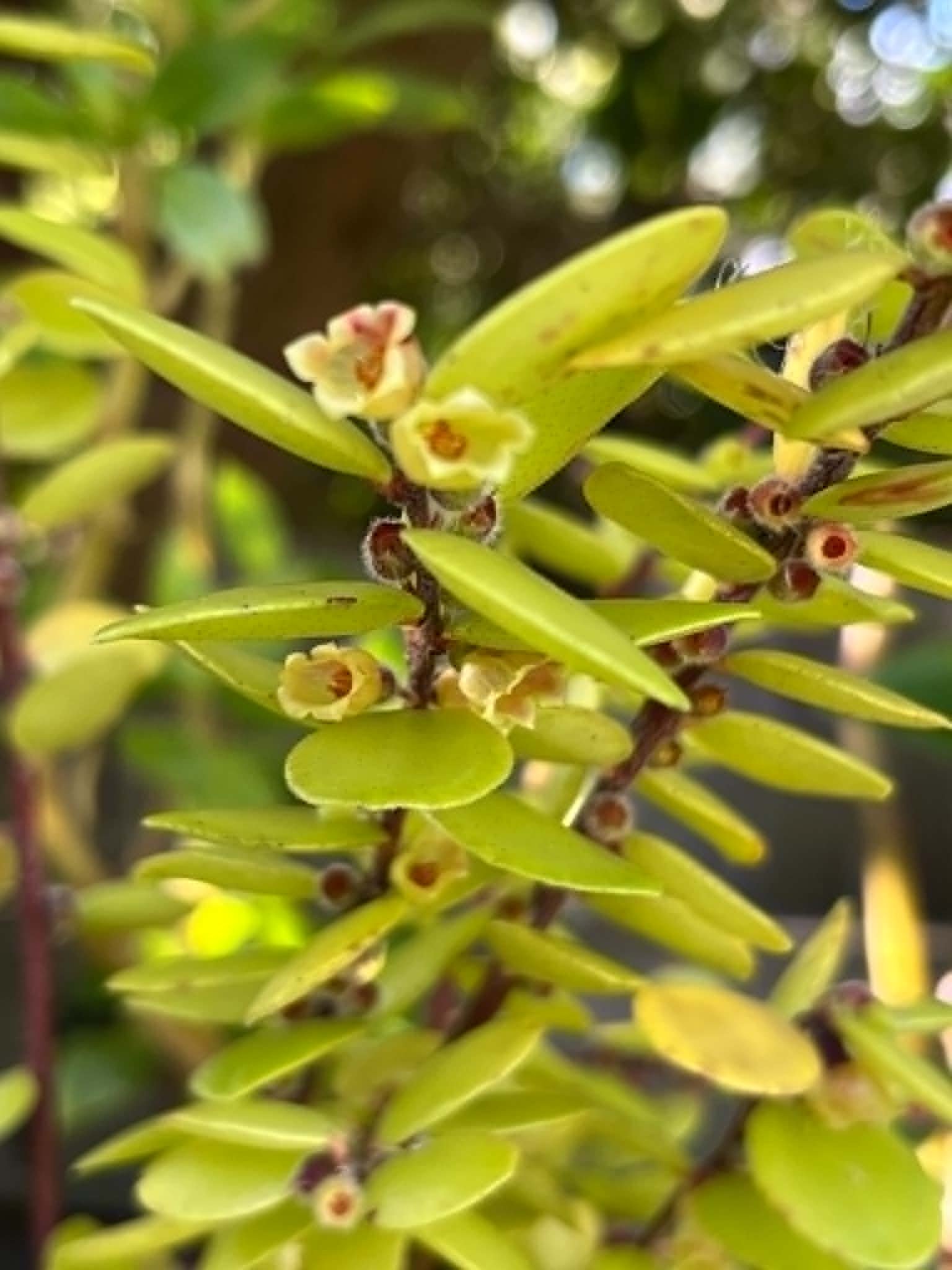
What Makes a Plant Rare?
Rare plants are not just expensive plants with fancy names. True rarity can come from limited natural range, slow propagation, unusual genetics, collector history, ethical sourcing, or limited availability in cultivation. This post breaks down what really makes a plant rare and why serious collectors should look beyond hype.
Understanding Collectors’ Plants Beyond the Hype
The word “rare” gets thrown around a lot in the plant world.
Sometimes it is honest. Sometimes it is marketing. Sometimes it means a plant is genuinely hard to find. Other times it just means somebody stuck a high price tag on it and hoped nobody asked questions.
Collectors know the difference, or at least they learn the difference over time.
To me, a rare plant is not just a plant that costs more. A rare plant has a reason behind it. Maybe it comes from a limited natural range. Maybe it is difficult to propagate. Maybe it grows slowly. Maybe it is an old cultivar that only a handful of growers still keep alive. Maybe it is a species that has not made its way into common cultivation yet.
Rarity is not one thing. It is a combination of biology, history, availability, demand, and responsibility.
Natural rarity
Some plants are rare because they are naturally limited.
A species may only grow in one region, one type of habitat, or one small ecological niche. Think about plants from isolated islands, specific wetlands, cloud forests, limestone cliffs, or seasonal tropical habitats. If the habitat is limited, the plant may be limited too.
That kind of rarity matters because it connects the plant to a real place. When you grow a plant like that, you are not just growing something pretty. You are growing a piece of a much larger story.
But natural rarity also comes with responsibility. International trade can put pressure on wild plant populations, which is one reason CITES exists. Kew explains that CITES monitors and controls around 30,000 plant species that are threatened, or potentially threatened, by international trade.
That does not mean every rare plant is illegal or unethical. It means growers and collectors should care where plants come from.
Trade rarity
Some plants are common in the wild but uncommon in cultivation.
That can happen when a plant is hard to ship, difficult to root, slow from seed, sensitive to environmental changes, or simply not well known yet. A plant may be abundant in its native region but nearly impossible to find from nurseries in the United States.
This is where small nurseries and private collectors matter. A lot of unusual plants survive in cultivation because regular growers kept passing around cuttings, seeds, divisions, or pups before the mainstream plant market ever cared about them.
That is one of my favorite parts of the plant world. Some plants do not become available because a big company decided they were profitable. They become available because somebody loved them enough to keep growing them.
Genetic rarity
Some rare plants are rare because of genetics.
Variegation is a good example. A variegated plant may have sections of tissue that produce less chlorophyll, creating white, cream, yellow, pink, or other unusual patterns. Some variegation is stable. Some is unstable. Some can revert. Some can weaken the plant if too much tissue lacks chlorophyll.
That is why two plants with the same name may not have the same value. One may have balanced variegation, strong growth, and good structure. Another may be weak, mostly white, or unstable.
The same thing applies to carnivorous plant cultivars. Venus flytrap cultivars can differ in trap shape, color, teeth, size, growth habit, and vigor. North Carolina Extension notes that many Venus flytrap cultivars exist, including forms that differ in trap size, color, and marginal guard hairs.
A real collector is not just buying a name. They are looking at the actual plant.
Propagation rarity
Some plants are rare because they are slow or difficult to propagate.
A fast-growing plant that roots easily from every node will not stay rare for long if enough people want it. But a plant that roots slowly, produces few offsets, resents disturbance, or takes years to reach size can remain uncommon even when demand is high.
That is one reason pups, divisions, and established cuttings can be valuable. They represent time. They represent risk. They represent the grower’s work.
When someone buys a small offshoot from a mother plant, they are not only buying that piece of plant material. They are buying into the time it took to grow the mother plant to the point where it could even produce that offshoot.
Historical rarity
Some plants are rare because of their story.
Named cultivars are a good example. A cultivar may have been selected by a specific grower, released through a small circle, or preserved by collectors over time. The plant may not be new, but it may still be hard to find because it was never mass produced.
That history matters.
A plant with a name should have some kind of identity behind it. Where did it come from? Who selected it? What traits make it different? Is the name formally registered, widely recognized, or just a trade name?
Not every plant needs a famous history to be worth growing, but when a plant does have a story, that story adds depth.
Hype rarity
Then there is hype.
Hype rarity happens when demand moves faster than supply. A plant shows up on social media, people start chasing it, prices jump, and suddenly everyone calls it rare. Sometimes the plant really is uncommon. Sometimes it is just temporarily expensive.
Hype is not always bad. It can bring attention to interesting plants. But hype gets dangerous when people stop asking questions.
Is the plant actually hard to propagate? Is it ethically sourced? Is the name correct? Is it just a common plant with a new label? Will the price collapse once tissue culture catches up?
Collectors should enjoy plants, but they should also stay sharp.
Ethical rarity
This is the part I think serious growers need to talk about more.
A rare plant should not come at the cost of destroying wild populations. The U.S. Fish & Wildlife Service explains that unregulated international trade in plants and animals can deplete wild populations and even contribute to extinction, and CITES is meant to help ensure trade does not threaten survival in the wild.
That matters in the collector world because rare plants can attract the wrong kind of attention. When money gets involved, poaching follows. Habitat destruction, illegal collection, and dishonest selling hurt both the plants and the people trying to grow them responsibly.
Ethical sourcing is not just a nice phrase. It is part of being a real plant person.
Nursery-propagated plants, seed-grown plants from legal sources, divisions from established cultivated stock, and responsibly shared cuttings all help reduce pressure on wild populations.
Rare does not always mean difficult
One thing I want people to understand is that rare does not always mean hard to grow.
Some rare plants are surprisingly easy once you understand them. Others are unforgiving. The problem is when people buy based on rarity alone and never learn the plant.
A rare plant still has basic needs. Light. Water. Airflow. Temperature. Root space. Seasonal rhythm. Media. Patience.
If you understand those things, you have a much better chance of keeping the plant alive. If you only chase the name, the plant becomes a trophy instead of a living thing.
What rarity means at Traphouse Nursery
For me, rare plants are not just about flexing. They are about curiosity.
I like plants that make people ask questions. Where is it from? Why does it grow like that? Why does it make that flower? Why does it trap insects? Why does it produce certain compounds? Why does one clone look different from another?
That is the kind of rare that matters to me.
A plant should make you want to learn.
At Traphouse Nursery, I want collectors to know what they are buying. I want people to understand why a plant is special, how to grow it, and why responsible cultivation matters. The goal is not just to own rare plants. The goal is to become the kind of grower who can keep them going.
Because rarity without knowledge is just hype.
Knowledge is what keeps the plant alive.
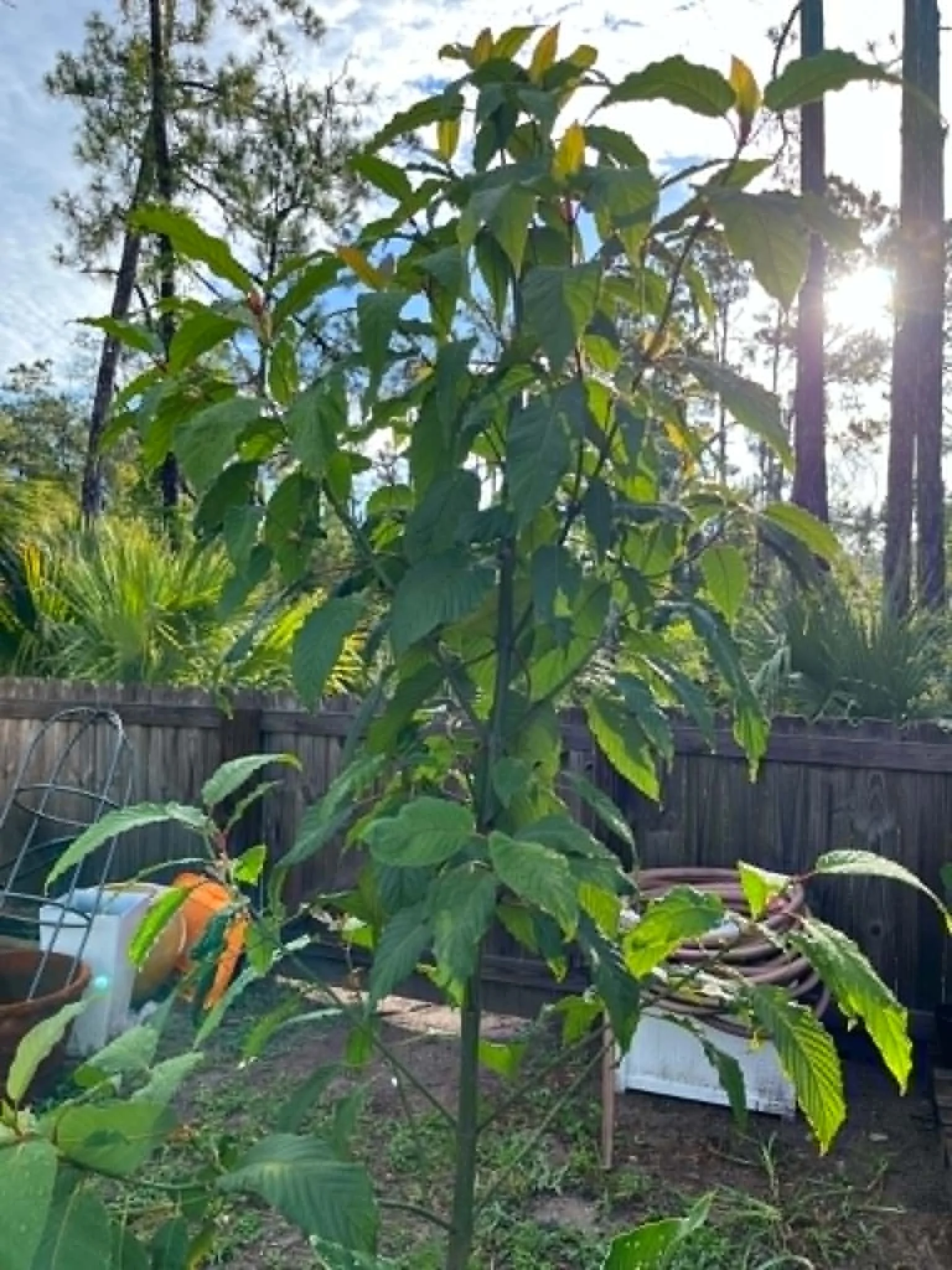
Mitragyna speciosa: A Botanical Introduction for Growers and Collectors
Mitragyna speciosa is often discussed for its alkaloids and traditional interest, but first and foremost it is a tropical tree in the coffee family. This post introduces the species from a botanical and grower’s perspective, covering its taxonomy, native habitat, growth habit, and why it remains such an interesting plant for collectors and ethnobotanical study.
Mitragyna speciosa is one of those plants that people usually hear about before they ever actually understand it.
A lot of the conversation around this plant is focused on kratom products, laws, alkaloids, and controversy. But before any of that, Mitragyna speciosa is a tree. A real tropical tree with a native range, a growth habit, a family, an ecology, and a place in the larger world of useful and chemically interesting plants.
That is the angle I care about as a grower.
At Traphouse Nursery, I look at Mitragyna speciosa first as a botanical species. It belongs to the coffee family, Rubiaceae, the same plant family that includes Coffea, the genus that gives us coffee. UF/IFAS notes that Mitragyna speciosa is a member of Rubiaceae, a family known for diverse bioactive metabolites, and compares it botanically to coffee as another well-known Rubiaceae plant with bioactive chemistry.
That alone makes the plant worth studying.
Taxonomy
The accepted scientific name is Mitragyna speciosa Korth. Plants of the World Online places it in the order Gentianales, family Rubiaceae, genus Mitragyna, species Mitragyna speciosa.
That may sound like dry information, but taxonomy matters. It gives us a map. It tells us who the plant is related to and gives growers clues about what kind of plant they are dealing with.
Rubiaceae is a major tropical plant family. Many members are woody, many are tropical, and several are known for important phytochemistry. Coffee is the famous one, but the family is much bigger than coffee.
Mitragyna speciosa is not a little windowsill herb. It is a tropical tree.
Native range and habitat
In its native habitat, Mitragyna speciosa grows in parts of Southeast Asia. UF/IFAS describes it as native to central and southern Thailand, northern peninsular Malaysia, Sumatra, Borneo, the Philippines, and New Guinea, with reports from Vietnam and Myanmar. The same source notes that it naturally inhabits tropical areas near freshwater swamps, wetlands, marshy regions, and riverbanks, where soils may remain saturated for long periods of the year.
That habitat information is important for growers.
A plant that comes from tropical wetland and riverbank environments is not going to behave like a cactus. It generally appreciates warmth, moisture, and humidity. It does not want to be frozen. It does not want to be dried to dust. It wants the kind of conditions that make sense for a tropical tree.
That does not mean it wants stagnant rot conditions in a pot. There is a difference between a wetland habitat with living soil, moving water, microbial life, heat, and oxygen, and a soggy pot with no airflow. Good cultivation is about understanding the difference.
Growth habit
Mitragyna speciosa can become a tree under the right conditions. In cultivation, especially in containers, it is usually managed much smaller. Like many tropical trees, it responds strongly to warmth, light, root space, and water.
Young plants can be sensitive. They often need a more stable environment than tough common houseplants. Once established, they can grow vigorously in warm conditions, but they still need proper care.
As a grower, I pay attention to the leaves first. Healthy leaves tell you a lot. Wilting, crisping, yellowing, or sudden leaf drop can point to stress from water, temperature, roots, light, or humidity. This is not a plant I would treat casually right after shipping. It deserves a proper acclimation period.
Why collectors are interested in it
There are a few reasons collectors are drawn to Mitragyna speciosa.
Some people are interested in ethnobotany. Some are interested in plant chemistry. Some are interested in tropical trees. Some collect useful plants from around the world. Some simply like growing species that have a story.
For me, the fascination is the same thing that pulled me into plants in the first place: plants are full of hidden systems. They make compounds, respond to stress, adapt to environments, and carry histories that humans are still trying to understand.
Mitragyna speciosa is a strong example of that.
Its leaves contain alkaloids, including mitragynine and 7-hydroxymitragynine. NIDA identifies mitragynine and 7-hydroxymitragynine as kratom alkaloids, and the FDA notes that 7-hydroxymitragynine occurs naturally in the plant but is only a minor constituent in natural kratom leaves.
That chemistry is one reason the plant is widely discussed, but it is also why educational responsibility matters.
Important educational and legal context
This article is about Mitragyna speciosa as a live botanical plant for cultivation and education. It is not medical advice, consumption advice, extraction advice, or product-use guidance.
That distinction matters.
The FDA states that there are no legally marketed prescription or over-the-counter drug products in the U.S. containing kratom or its known alkaloids, and the agency warns against using kratom for medical treatment.
That is why I believe growers and sellers need to be careful with language. There is a big difference between educating people about a plant and making claims about what someone should do with it.
At Traphouse Nursery, Mitragyna speciosa is treated as a botanical specimen, a tropical plant, and a subject of plant education. The focus is cultivation, taxonomy, plant history, and phytochemical curiosity.
Growing perspective
For growers, the main thing is to remember what the plant is: a tropical Rubiaceae tree associated with warm, wet habitats.
That means warmth matters. Moisture matters. Humidity can matter. Root health matters. It should be protected from cold. It should be acclimated carefully after shipping. It should be grown in a way that supports healthy roots, not just wet media.
A young Mitragyna plant may need more attention than a pothos or a snake plant. That does not make it impossible. It just means the grower needs to pay attention.
The reward is growing a plant with real botanical depth.
Why I grow it
I grow plants like Mitragyna speciosa because they remind me that plants are not simple.
A plant can be beautiful, useful, controversial, misunderstood, and scientifically interesting all at once. It can belong to a family with coffee, grow along tropical waterways, produce complex alkaloids, and become part of conversations that stretch across botany, chemistry, law, medicine, and culture.
That is not a regular houseplant story.
And honestly, that is what makes it worth learning about.
The goal is not to hype the plant. The goal is to understand it.
Educational note: This article is for botanical, horticultural, and educational purposes only. It is not intended as medical, legal, consumption, preparation, or extraction guidance.
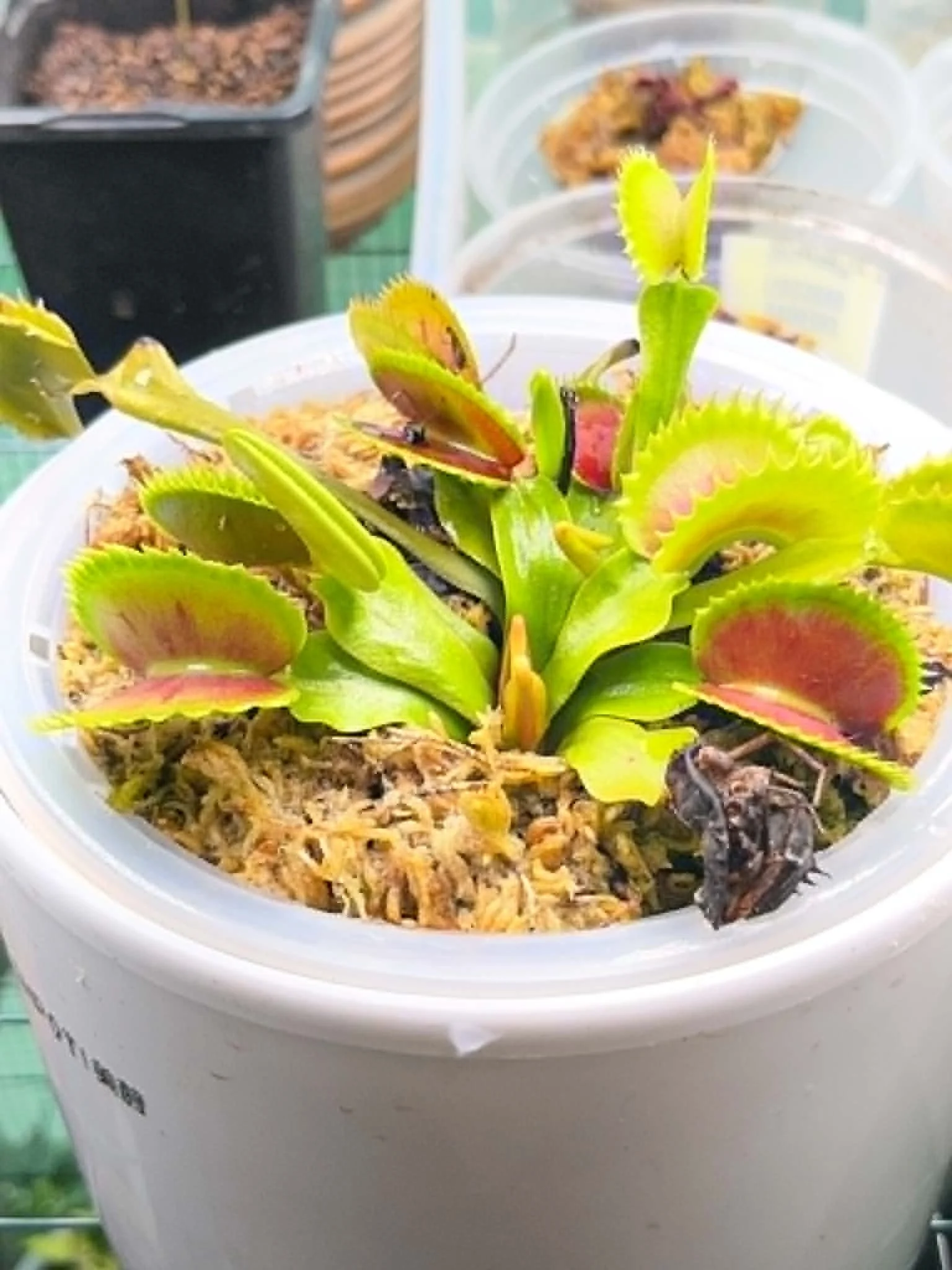
Welcome to Traphouse Nursery
Traphouse Nursery began with a fascination for plants that are different — carnivorous plants, medicinal species, tropical oddities, rare cultivars, and plants with stories deeper than most people realize. This post introduces the nursery, the curiosity behind it, and the Plant Library created to share botanical history, growing knowledge, and rare plant education.
The Story Behind Traphouse Nursery
Like many plant collectors, I found myself constantly learning, propagating, experimenting, and searching for plants that sparked curiosity. Some plants stood out because of their beauty. Others because of their rarity, usefulness, strange growth habits, or the history connected to them.
The name Traphouse Nursery was inspired by one of nature’s most fascinating plants — the Venus Flytrap. Few plants capture the imagination quite like a carnivorous plant, and that sense of wonder remains at the heart of this nursery today.
Through this website, Traphouse Nursery shares healthy plants, seeds, cuttings, nursery stock, collector plants, and live botanical specimens whenever they are available. Some plants are offered directly through the website, some through eBay, and some through manual invoice request due to limited availability, shipping requirements, or compliance review.
But Traphouse Nursery is about more than buying and selling plants.
It is about learning from plants, preserving unusual genetics, growing things carefully, and helping other growers understand the plants they bring into their collections.
Some plants have been valued by people for generations. Others evolved extraordinary adaptations to survive in challenging environments. Some are prized by collectors around the world. Others simply make a yard, porch, greenhouse, or collection feel more alive.
Whether you are growing your first Venus Flytrap, building a rare plant collection, learning about tropical botanical specimens, starting seeds, rooting cuttings, or looking for something unusual, I’m glad you’re here.
Thanks for stopping by, and welcome to Traphouse Nursery.
— Traphouse Nursery