
What Makes a Plant Rare?
Understanding Collectors’ Plants Beyond the Hype
The word “rare” gets thrown around a lot in the plant world.
Sometimes it is honest. Sometimes it is marketing. Sometimes it means a plant is genuinely hard to find. Other times it just means somebody stuck a high price tag on it and hoped nobody asked questions.
Collectors know the difference, or at least they learn the difference over time.
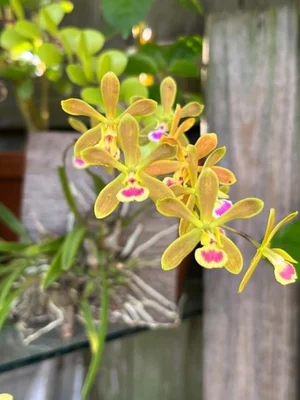
To me, a rare plant is not just a plant that costs more. A rare plant has a reason behind it. Maybe it comes from a limited natural range. Maybe it is difficult to propagate. Maybe it grows slowly. Maybe it is an old cultivar that only a handful of growers still keep alive. Maybe it is a species that has not made its way into common cultivation yet.
Rarity is not one thing. It is a combination of biology, history, availability, demand, and responsibility.
Natural rarity
Some plants are rare because they are naturally limited.
A species may only grow in one region, one type of habitat, or one small ecological niche. Think about plants from isolated islands, specific wetlands, cloud forests, limestone cliffs, or seasonal tropical habitats. If the habitat is limited, the plant may be limited too.
That kind of rarity matters because it connects the plant to a real place. When you grow a plant like that, you are not just growing something pretty. You are growing a piece of a much larger story.
But natural rarity also comes with responsibility. International trade can put pressure on wild plant populations, which is one reason CITES exists. Kew explains that CITES monitors and controls around 30,000 plant species that are threatened, or potentially threatened, by international trade.
That does not mean every rare plant is illegal or unethical. It means growers and collectors should care where plants come from.
Trade rarity
Some plants are common in the wild but uncommon in cultivation.
That can happen when a plant is hard to ship, difficult to root, slow from seed, sensitive to environmental changes, or simply not well known yet. A plant may be abundant in its native region but nearly impossible to find from nurseries in the United States.
This is where small nurseries and private collectors matter. A lot of unusual plants survive in cultivation because regular growers kept passing around cuttings, seeds, divisions, or pups before the mainstream plant market ever cared about them.
That is one of my favorite parts of the plant world. Some plants do not become available because a big company decided they were profitable. They become available because somebody loved them enough to keep growing them.
Genetic rarity
Some rare plants are rare because of genetics.
Variegation is a good example. A variegated plant may have sections of tissue that produce less chlorophyll, creating white, cream, yellow, pink, or other unusual patterns. Some variegation is stable. Some is unstable. Some can revert. Some can weaken the plant if too much tissue lacks chlorophyll.
That is why two plants with the same name may not have the same value. One may have balanced variegation, strong growth, and good structure. Another may be weak, mostly white, or unstable.
The same thing applies to carnivorous plant cultivars. Venus flytrap cultivars can differ in trap shape, color, teeth, size, growth habit, and vigor. North Carolina Extension notes that many Venus flytrap cultivars exist, including forms that differ in trap size, color, and marginal guard hairs.
A real collector is not just buying a name. They are looking at the actual plant.
Propagation rarity
Some plants are rare because they are slow or difficult to propagate.
A fast-growing plant that roots easily from every node will not stay rare for long if enough people want it. But a plant that roots slowly, produces few offsets, resents disturbance, or takes years to reach size can remain uncommon even when demand is high.
That is one reason pups, divisions, and established cuttings can be valuable. They represent time. They represent risk. They represent the grower’s work.
When someone buys a small offshoot from a mother plant, they are not only buying that piece of plant material. They are buying into the time it took to grow the mother plant to the point where it could even produce that offshoot.
Historical rarity
Some plants are rare because of their story.
Named cultivars are a good example. A cultivar may have been selected by a specific grower, released through a small circle, or preserved by collectors over time. The plant may not be new, but it may still be hard to find because it was never mass produced.
That history matters.
A plant with a name should have some kind of identity behind it. Where did it come from? Who selected it? What traits make it different? Is the name formally registered, widely recognized, or just a trade name?
Not every plant needs a famous history to be worth growing, but when a plant does have a story, that story adds depth.
Hype rarity
Then there is hype.
Hype rarity happens when demand moves faster than supply. A plant shows up on social media, people start chasing it, prices jump, and suddenly everyone calls it rare. Sometimes the plant really is uncommon. Sometimes it is just temporarily expensive.
Hype is not always bad. It can bring attention to interesting plants. But hype gets dangerous when people stop asking questions.
Is the plant actually hard to propagate? Is it ethically sourced? Is the name correct? Is it just a common plant with a new label? Will the price collapse once tissue culture catches up?
Collectors should enjoy plants, but they should also stay sharp.
Ethical rarity
This is the part I think serious growers need to talk about more.
A rare plant should not come at the cost of destroying wild populations. The U.S. Fish & Wildlife Service explains that unregulated international trade in plants and animals can deplete wild populations and even contribute to extinction, and CITES is meant to help ensure trade does not threaten survival in the wild.
That matters in the collector world because rare plants can attract the wrong kind of attention. When money gets involved, poaching follows. Habitat destruction, illegal collection, and dishonest selling hurt both the plants and the people trying to grow them responsibly.
Ethical sourcing is not just a nice phrase. It is part of being a real plant person.
Nursery-propagated plants, seed-grown plants from legal sources, divisions from established cultivated stock, and responsibly shared cuttings all help reduce pressure on wild populations.
Rare does not always mean difficult
One thing I want people to understand is that rare does not always mean hard to grow.
Some rare plants are surprisingly easy once you understand them. Others are unforgiving. The problem is when people buy based on rarity alone and never learn the plant.
A rare plant still has basic needs. Light. Water. Airflow. Temperature. Root space. Seasonal rhythm. Media. Patience.
If you understand those things, you have a much better chance of keeping the plant alive. If you only chase the name, the plant becomes a trophy instead of a living thing.
What rarity means at Traphouse Nursery
For me, rare plants are not just about flexing. They are about curiosity.
I like plants that make people ask questions. Where is it from? Why does it grow like that? Why does it make that flower? Why does it trap insects? Why does it produce certain compounds? Why does one clone look different from another?
That is the kind of rare that matters to me.
A plant should make you want to learn.
At Traphouse Nursery, I want collectors to know what they are buying. I want people to understand why a plant is special, how to grow it, and why responsible cultivation matters. The goal is not just to own rare plants. The goal is to become the kind of grower who can keep them going.
Because rarity without knowledge is just hype.
Knowledge is what keeps the plant alive.